


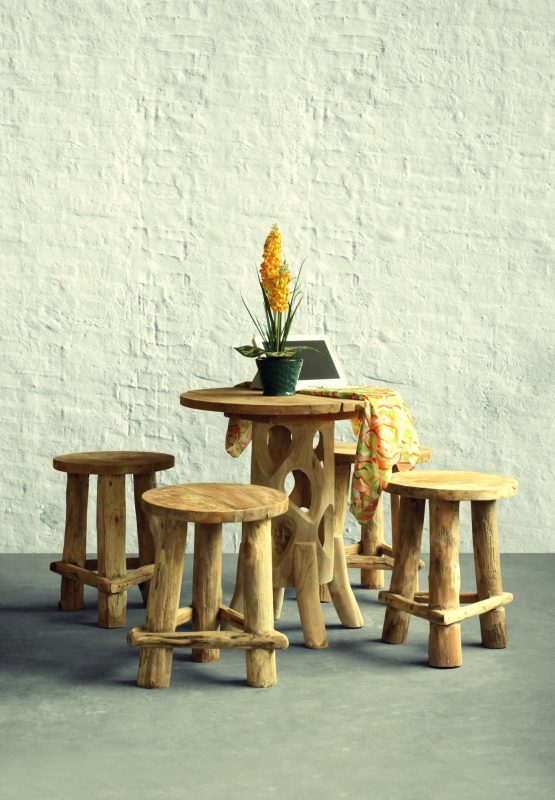
How to Care for Reclaimed Teak Furniture. The chairs, tables, and accessories that we have outside of our homes, usually suffer greatly from bad weather and, caring for them with good care can mean we enjoy them for more or less time. How to Care for Reclaimed Teak Furniture Teak outdoor furnitureThe material which suffers […]
Tag Archives: Reclaimed Teak Table Top
Sourcing Reclaimed Teak Table Top Solutions for Commercial Portfolios
Specifying a commercial-grade Reclaimed Teak Table Top requires balancing structural integrity, timber provenance, and long-term dimensional stability under diverse climatic conditions. Global commercial furniture buyers, architects, and hospitality procurement teams face distinct challenges when transitioning from virgin timber to salvaged hardwoods. Unlike virgin plantation teak (Tectona grandis), reclaimed architectural teak has completed natural shrinkage cycles across decades of exposure in heritage structures, old bridges, and traditional timber framing across Java.
Procurement decisions hinge on precise technical specifications: moisture content limits, lamination methods, core substrate integration, and surface wear resistance. This hub serves as technical directory for evaluating, procuring, and integrating architectural salvaged teak tops. Use specifications below to benchmark container-load orders and project fit-outs against international durability standards.
“`
Salvaged Source Material -> Metal Extraction & Sorting -> Kiln Conditioning (10-12% MC) -> Precision Surfacing -> Finger-Joint / Edge-Glue Assembly -> CNC Calibration -> Final Sanding & Finishing
“`
Architectural Heritage and Material Character
Salvaged teak demonstrates higher density and natural oil concentration than juvenile plantation timber. Decades of atmospheric exposure cure wood fibers naturally, producing timber with exceptional resistance to rot, fungal decay, and insect infiltration.
Salvaged timber features inherent character marks: historic mortise pockets, hand-hewn bolt holes, original nail scars, and oxidation color variations. Commercial production requires classifying these features into structured aesthetic grades. This classification ensures visual consistency across volume orders while preserving genuine historical provenance.
Grade A Heritage (Clean Salvaged): Minimal infill work, consistent grain alignment, aged golden-brown tone, limited visible fastener markings.
Grade B Character (Rustic Architectural): Visible historical scars, stabilized mortise plugs, varied grain figure, medium tonal variation.
Grade C Industrial (Patina-Heavy): Prominent structural voids stabilized with teak patches or black epoxy, heavy nail oxidation marks, deep wire-brushed surface texture.
Technical Specifications: Reclaimed Teak Table Top Engineering
Deploying solid wood surfaces in high-traffic hospitality or corporate workspaces demands rigorous joinery engineering to counteract hygroscopic movement. Solid reclaimed planks expand and contract along tangential axes when exposed to ambient relative humidity shifts.
“`
Grain Movement Vector:
Tangential: [=== 2.5% – 4.0% Variance ===]
Radial: [= 1.2% – 1.8% Variance =]
Longitudinal: []
“`
Core Construction Standards
Commercial tabletops utilize three primary structural approaches:
1. Solid Edge-Glued Planks:
Individual reclaimed boards planed, squared, and edge-bonded using industrial D4 polyurethane adhesive or cross-linking PVAc adhesives. Bottom faces receive transverse relief kerfs to dissipate internal tension across wider surfaces.
2. Engineered Teak Surface with Multi-Ply Substrate:
Thick reclaimed teak wear layer (4mm to 6mm) hydraulically cold-pressed over exterior-grade marine birch plywood or moisture-resistant MDF. Eliminates warping risk in environments with severe seasonal HVAC humidity fluctuations.
3. End-Cleat and Breadboard Construction:
Traditional tongue-and-groove end breadboards fastened with slotted mechanical anchors. Allows center planks to move laterally without splitting table ends or warping mounting points.
Specification Parameter
Standard Architectural Grade
Heavy Commercial / Hospitality Grade
Outdoor Wet-Climate Standard
Wear Layer / Thickness
30 mm Solid Plank
40 mm – 50 mm Solid Plank
35 mm Slatted Construction
Moisture Content (MC)
10% – 12% Kiln Conditioned
8% – 10% Vacuum Kiln Cured
12% – 14% Air Stabilized
Adhesive Classification
DIN EN 204 Type D3 Water Resistant
DIN EN 204 Type D4 Polyurethane Structural
Epiphane Two-Part Marine Epoxy
Surface Calibration
P180 Dual-Action Sanded
P240 Machine Sanded / Wire Brushed
P120 Open Grain / Wire Brushed
Stabilization Hardware
Surface Z-clips
Inset C-Channel Cold-Rolled Steel Bars
Stainless Steel Expansion Fasteners
Defect Stabilization
Matching Timber Dutchman Inserts
Black Tinted Structural Epoxy Resin
Elastic Marine Polyurethane Infill
Moisture Calibration and Kiln Stabilization
Raw salvaged timber contains uneven localized moisture pockets from past structural applications. Reliable manufacturing mandates primary drying followed by secondary de-humidification kilns. Equilibrium Moisture Content (EMC) must stabilize within 8% to 12% based on final delivery zone requirements (North America: 7-9%, Western Europe: 9-11%, Middle East: 6-8%). Tops failing this moisture conditioning split along historic mortise seams once deployed in conditioned interior environments.
“`
Target EMC by Destination:
North America / Northern EU: 7% – 9%
Coastal / Tropical Regions: 11% – 13%
Middle East / Arid Zones: 6% – 8%
“`
Strategic Selection Matrix: Solid vs. Engineered vs. Slatted Formats
Different commercial programs demand distinct tabletop configurations based on cleaning protocols, foot traffic density, and direct sun exposure.
Solid Slab Configuration
Best Application: Executive boardrooms, boutique restaurant dining, high-profile reception focal points.
Strengths: Indefinite lifespan; sandable and refinishable across decades; authentic massive timber weight and acoustic deadening.
Risks: Sensitive to extreme ambient humidity shifts; requires heavy-gauge steel C-channel routing on underside to maintain cross-grain flatness.
Engineered Composite Format
Best Application: Fast-casual restaurant franchises, hotel guestrooms, high-turnover co-working spaces.
Strengths: Dimensional stability; reduced total weight lowers ocean freight container costs; optimized yield from limited heritage timber stocks.
Risks: Non-repairable once deep scratches penetrate wear layer; edges require matching solid edge-banding to mask substrate plies.
Slatted Exterior Design
Best Application: Hotel rooftop bars, alfresco dining decks, resort poolside amenities.
Strengths: Free drainage of rainwater; individual plank movement absorbed by spacing gaps; minimal ponding distortion.
Risks: Debris accumulation between slats; requires periodic clearing to maintain hygiene and airflow.
Exploring the Knowledge Base
Navigate technical articles published across this topic cluster for implementation guidelines, maintenance routines, and procurement specs:
Maintenance Protocols: Consult [How to Care for Reclaimed Teak Furniture] for chemical compatibility sheets, safe commercial cleansers, periodic oil replenishment cadences, and seasonal sealing cycles.
Outdoor Performance Analysis: Review [Reclaimed Teak Wood Furniture | Recycled Teak Outdoor Furniture] for material weathering expectations, silver-grey patina development under UV exposure, and heavy-use outdoor joinery profiles.
Engineering and Procurement Checklist
Execute these procurement checks before confirming volume fabrication schedules:
Underside Steel Reinforcement
Ensure tops wider than 800mm incorporate recessed cold-rolled steel C-channels along bottom surface. Channels must utilize slotted oval bolt holes to allow lateral timber movement while restraining cupping.
Defect Stabilization Specifications
Explicitly specify resin filler chemistry. Standard polyester resins crack under expansion stress. Demand structural two-part epoxy compounds tinted to match target wood tone.
Base Substructure Anchor Systems
Never rigidly glue or bolt wood tops directly to metal table bases. Demand threaded brass inserts or slotted mounting brackets that permit minimum 4mm lateral expansion travel across grain width.
Global Supply Partnership with Indonesia Green Furniture Manufacturer
Sourcing verified salvaged timber demands direct supply-chain governance at the manufacturing source. Operating from Jepara, Central Java since 1993, Indonesia Green Furniture Manufacturer engineers high-performance architectural wood solutions for global B2B furniture retailers, importers, hospitality developers, and commercial specifiers.
Each Reclaimed Teak Table Top program undergoes rigorous chain-of-custody tracking, certified timber sourcing, industrial kiln drying, precision CNC profiling, and structural quality assurance prior to containerization. Contact our commercial engineering team to review timber grading parameters, request structural shop drawings, or schedule custom prototype fabrication for upcoming commercial project specifications.

18
Jan
Reclaimed Teak Wood Furniture Reclaimed Teak Wood Furniture | Recycled Teak Outdoor Furniture. In buying furniture products with high-quality materials, it is currently difficult to find. Because in that area it is difficult to find the best woods. The best wood to make in our company uses teak. Teak wood is the wood of choice […]
Sourcing Reclaimed Teak Table Top Solutions for Commercial Portfolios
Specifying a commercial-grade Reclaimed Teak Table Top requires balancing structural integrity, timber provenance, and long-term dimensional stability under diverse climatic conditions. Global commercial furniture buyers, architects, and hospitality procurement teams face distinct challenges when transitioning from virgin timber to salvaged hardwoods. Unlike virgin plantation teak (Tectona grandis), reclaimed architectural teak has completed natural shrinkage cycles across decades of exposure in heritage structures, old bridges, and traditional timber framing across Java.
Procurement decisions hinge on precise technical specifications: moisture content limits, lamination methods, core substrate integration, and surface wear resistance. This hub serves as technical directory for evaluating, procuring, and integrating architectural salvaged teak tops. Use specifications below to benchmark container-load orders and project fit-outs against international durability standards.
```
Salvaged Source Material -> Metal Extraction & Sorting -> Kiln Conditioning (10-12% MC) -> Precision Surfacing -> Finger-Joint / Edge-Glue Assembly -> CNC Calibration -> Final Sanding & Finishing
```
Architectural Heritage and Material Character
Salvaged teak demonstrates higher density and natural oil concentration than juvenile plantation timber. Decades of atmospheric exposure cure wood fibers naturally, producing timber with exceptional resistance to rot, fungal decay, and insect infiltration.
Salvaged timber features inherent character marks: historic mortise pockets, hand-hewn bolt holes, original nail scars, and oxidation color variations. Commercial production requires classifying these features into structured aesthetic grades. This classification ensures visual consistency across volume orders while preserving genuine historical provenance.
- Grade A Heritage (Clean Salvaged): Minimal infill work, consistent grain alignment, aged golden-brown tone, limited visible fastener markings.
- Grade B Character (Rustic Architectural): Visible historical scars, stabilized mortise plugs, varied grain figure, medium tonal variation.
- Grade C Industrial (Patina-Heavy): Prominent structural voids stabilized with teak patches or black epoxy, heavy nail oxidation marks, deep wire-brushed surface texture.
Technical Specifications: Reclaimed Teak Table Top Engineering
Deploying solid wood surfaces in high-traffic hospitality or corporate workspaces demands rigorous joinery engineering to counteract hygroscopic movement. Solid reclaimed planks expand and contract along tangential axes when exposed to ambient relative humidity shifts.
```
Grain Movement Vector:
Tangential: [=== 2.5% - 4.0% Variance ===]
Radial: [= 1.2% - 1.8% Variance =]
Longitudinal: [< 0.1% Negligible >]
```
Core Construction Standards
Commercial tabletops utilize three primary structural approaches:
1. Solid Edge-Glued Planks:
Individual reclaimed boards planed, squared, and edge-bonded using industrial D4 polyurethane adhesive or cross-linking PVAc adhesives. Bottom faces receive transverse relief kerfs to dissipate internal tension across wider surfaces.
2. Engineered Teak Surface with Multi-Ply Substrate:
Thick reclaimed teak wear layer (4mm to 6mm) hydraulically cold-pressed over exterior-grade marine birch plywood or moisture-resistant MDF. Eliminates warping risk in environments with severe seasonal HVAC humidity fluctuations.
3. End-Cleat and Breadboard Construction:
Traditional tongue-and-groove end breadboards fastened with slotted mechanical anchors. Allows center planks to move laterally without splitting table ends or warping mounting points.
| Specification Parameter | Standard Architectural Grade | Heavy Commercial / Hospitality Grade | Outdoor Wet-Climate Standard |
|---|---|---|---|
| Wear Layer / Thickness | 30 mm Solid Plank | 40 mm – 50 mm Solid Plank | 35 mm Slatted Construction |
| Moisture Content (MC) | 10% – 12% Kiln Conditioned | 8% – 10% Vacuum Kiln Cured | 12% – 14% Air Stabilized |
| Adhesive Classification | DIN EN 204 Type D3 Water Resistant | DIN EN 204 Type D4 Polyurethane Structural | Epiphane Two-Part Marine Epoxy |
| Surface Calibration | P180 Dual-Action Sanded | P240 Machine Sanded / Wire Brushed | P120 Open Grain / Wire Brushed |
| Stabilization Hardware | Surface Z-clips | Inset C-Channel Cold-Rolled Steel Bars | Stainless Steel Expansion Fasteners |
| Defect Stabilization | Matching Timber Dutchman Inserts | Black Tinted Structural Epoxy Resin | Elastic Marine Polyurethane Infill |
Moisture Calibration and Kiln Stabilization
Raw salvaged timber contains uneven localized moisture pockets from past structural applications. Reliable manufacturing mandates primary drying followed by secondary de-humidification kilns. Equilibrium Moisture Content (EMC) must stabilize within 8% to 12% based on final delivery zone requirements (North America: 7-9%, Western Europe: 9-11%, Middle East: 6-8%). Tops failing this moisture conditioning split along historic mortise seams once deployed in conditioned interior environments.
```
Target EMC by Destination:
North America / Northern EU: 7% - 9%
Coastal / Tropical Regions: 11% - 13%
Middle East / Arid Zones: 6% - 8%
```
Strategic Selection Matrix: Solid vs. Engineered vs. Slatted Formats
Different commercial programs demand distinct tabletop configurations based on cleaning protocols, foot traffic density, and direct sun exposure.
Solid Slab Configuration
- Best Application: Executive boardrooms, boutique restaurant dining, high-profile reception focal points.
- Strengths: Indefinite lifespan; sandable and refinishable across decades; authentic massive timber weight and acoustic deadening.
- Risks: Sensitive to extreme ambient humidity shifts; requires heavy-gauge steel C-channel routing on underside to maintain cross-grain flatness.
Engineered Composite Format
- Best Application: Fast-casual restaurant franchises, hotel guestrooms, high-turnover co-working spaces.
- Strengths: Dimensional stability; reduced total weight lowers ocean freight container costs; optimized yield from limited heritage timber stocks.
- Risks: Non-repairable once deep scratches penetrate wear layer; edges require matching solid edge-banding to mask substrate plies.
Slatted Exterior Design
- Best Application: Hotel rooftop bars, alfresco dining decks, resort poolside amenities.
- Strengths: Free drainage of rainwater; individual plank movement absorbed by spacing gaps; minimal ponding distortion.
- Risks: Debris accumulation between slats; requires periodic clearing to maintain hygiene and airflow.
Exploring the Knowledge Base
Navigate technical articles published across this topic cluster for implementation guidelines, maintenance routines, and procurement specs:
- Maintenance Protocols: Consult [How to Care for Reclaimed Teak Furniture] for chemical compatibility sheets, safe commercial cleansers, periodic oil replenishment cadences, and seasonal sealing cycles.
- Outdoor Performance Analysis: Review [Reclaimed Teak Wood Furniture | Recycled Teak Outdoor Furniture] for material weathering expectations, silver-grey patina development under UV exposure, and heavy-use outdoor joinery profiles.
Engineering and Procurement Checklist
Execute these procurement checks before confirming volume fabrication schedules:
Underside Steel Reinforcement
Ensure tops wider than 800mm incorporate recessed cold-rolled steel C-channels along bottom surface. Channels must utilize slotted oval bolt holes to allow lateral timber movement while restraining cupping.
Defect Stabilization Specifications
Explicitly specify resin filler chemistry. Standard polyester resins crack under expansion stress. Demand structural two-part epoxy compounds tinted to match target wood tone.
Base Substructure Anchor Systems
Never rigidly glue or bolt wood tops directly to metal table bases. Demand threaded brass inserts or slotted mounting brackets that permit minimum 4mm lateral expansion travel across grain width.
Global Supply Partnership with Indonesia Green Furniture Manufacturer
Sourcing verified salvaged timber demands direct supply-chain governance at the manufacturing source. Operating from Jepara, Central Java since 1993, Indonesia Green Furniture Manufacturer engineers high-performance architectural wood solutions for global B2B furniture retailers, importers, hospitality developers, and commercial specifiers.
Each Reclaimed Teak Table Top program undergoes rigorous chain-of-custody tracking, certified timber sourcing, industrial kiln drying, precision CNC profiling, and structural quality assurance prior to containerization. Contact our commercial engineering team to review timber grading parameters, request structural shop drawings, or schedule custom prototype fabrication for upcoming commercial project specifications.