


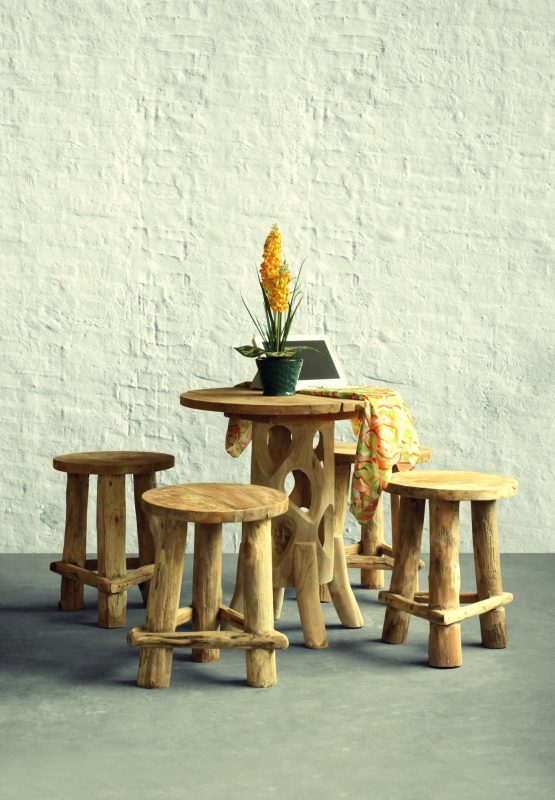
How to Care for Reclaimed Teak Furniture. The chairs, tables, and accessories that we have outside of our homes, usually suffer greatly from bad weather and, caring for them with good care can mean we enjoy them for more or less time. How to Care for Reclaimed Teak Furniture Teak outdoor furnitureThe material which suffers […]
Tag Archives: Reclaimed Teak Table
Sourcing Architecture: The Commercial Value of a Reclaimed Teak Table
Specifying an authentic Reclaimed Teak Table offers commercial hospitality buyers, international furniture importers, and architectural specifiers an unmatched combination of dimensional stability and historical character. Unlike plantation timber harvested on rapid growth cycles, salvaged teak comes from decommissioned heritage structures, traditional Javanese residences, and retired fishing boats. Decades of atmospheric exposure cure this timber naturally, purging residual sap and equalizing moisture content across the internal cell matrix. The result is structural lumber that resists the warping, cupping, and splitting common in fast-kilned alternatives.
This curated hub serves as your central specification directory. It synthesizes architectural standards, material benchmarks, and procurement frameworks across our production lines. Use this resource to evaluate salvage grades, assess joinery profiles, and align sustainable furniture sourcing with global delivery schedules.
Material Integrity: Virgin Timber vs. Historic Architectural Teak
The technical distinction between newly harvested wood and structural salvaged teak centers on cellular density and natural oil concentrations. Centuries-old Tectona grandis developed dense heartwood through decades of slow growth. Salvaged components preserve this high silica and resin volume, delivering natural defense against wood-boring insects, fungus, and moisture infiltration.
Dimensional Equilibrium: Salvaged components maintain an ambient moisture equilibrium between 8% and 12% after secondary kiln-drying, minimizing field failure across diverse export climates.
Surface Topography: Historic mortise impressions, bolt holes, and weathered grain ridges provide an authentic tactile profile impossible to replicate via mechanical distress methods.
Ecological Compliance: Specifying recycled timber prevents virgin deforestation, preserves native canopy ecosystems, and complies directly with EUDR, Lacey Act, and FSC recycled protocols.
Strategic Selection Matrix for B2B Procurement
Selecting the appropriate table system requires balancing structural loads, regional climate exposures, and maintenance parameters. The comparative table below outlines the primary industrial typologies manufactured within our Central Java facilities.
Structural Configuration
Base Lumber Provenance
Target Application
Surface Hardness (Janka Scale)
Primary B2B Specifier Profile
Architectural Beam Trestle
Demolished structural support posts
Commercial dining, high-traffic hospitality spaces
~1,150–1,250 lbf
Resort developers, corporate interior designers
Butcher-Block Parquet Top
Selected structural salvage offcuts
Indoor restaurants, boutique cafe fit-outs
~1,050–1,150 lbf
Commercial procurement agents, retail chains
Traditional Boat Timber Top
Decommissioned coastal fishing hulls
Covered terraces, maritime-themed developments
~1,200–1,300 lbf
Leisure brands, bespoke contract furnishers
Minimalist Plank System
Reclaimed structural floorboards
Modern residential lines, luxury villa projects
~1,100–1,200 lbf
High-end furniture importers, design showrooms
Structural Classifications and Functional Typologies
Every commercial project presents distinct operational demands. A reclaimed teak table built for high-turnover hospitality dining requires different joinery tolerances than residential showroom centerpieces:
1. Heavy-Section Plank Tables: Built with continuous long-grain slabs sourced from historic girders. We calibrate breadboard ends with slotted internal fasteners to accommodate seasonal lateral expansion without fracturing the timber core.
2. Modular Floating Top Systems: Engineered for modern commercial settings. These combine historic solid surfaces with powder-coated steel or solid teak substructures, isolating thermal movement between the top and structural supports.
3. Laminated Architectural Tops: Utilizing precision finger-jointing and marine-grade epoxy adhesives. This method transforms irregular salvage dimensions into uniform panels that eliminate edge-warping under direct HVAC airflow.
Integration with Cluster Knowledge Resources
Procurement decisions extend beyond initial delivery. Sourcing teams must account for continuous operational life cycles, exterior weathering risks, and long-term care regimes. Explore our dedicated technical briefs within this content cluster to guide post-installation management:
Preventive Care Protocols: Review our comprehensive guide, How to Care for Reclaimed Teak Furniture, to evaluate maintenance schedules, food-safe sealers, oil treatment frequencies, and seasonal stabilization practices for commercial environments.
Exterior Architecture Integration: Access our detailed analysis, Reclaimed Teak Wood Furniture | Recycled Teak Outdoor Furniture, to examine drainage engineering, marine-grade joinery tolerances, and UV stabilization for unroofed installations.
Production Engineering and Wholesale Specifications
Our manufacturing operations in Jepara, Central Java, turn reclaimed timber into precision-engineered commercial goods through verified industrial stages:
Metal De-Nailing & Scanning: Every salvaged beam undergoes multi-pass electromagnetic metal detection to clear historic hand-forged spikes, bolts, and structural fasteners prior to milling.
Kiln Conditioning: Secondary dehumidification kilns equalize internal moisture content, preventing thermal shock when goods transition to arid or cold export regions.
Precision Joinery Execution: Traditional mortise-and-tenon construction is secured with cured dowels, ensuring structural rigidity without relying on external bracing hardware.
Global Distribution and Project Assurance
International wholesale orders require strict quality assurance and rigorous shipping preparation. Indonesia Green Furniture oversees every stage from raw material selection through five-ply export carton packaging, corner edge protection, and container desiccant management. Full container load (FCL) orders benefit from custom palletization and direct export handling via Tanjung Emas Port in Semarang.
Frequently Asked Technical Questions
How does salvage teak react to changing indoor HVAC conditions?
Because historic timber has expanded and contracted through decades of outdoor weathering, its internal cell structure is settled. Kiln-conditioned salvage wood shows significantly less volumetric movement than commercial green timber when exposed to central heating or air conditioning.
What documentation confirms timber legality and provenance?
All wood processed within our production ecosystem is backed by Indonesian SVLK (Timber Legality Verification System) standards, guaranteeing legitimate sourcing and compliance with international trade directives.
Procure Direct from Jepara Craftsmanship
Since 1993, our parent company Wisanka Indonesia has engineered sustainable timber solutions for international retailers, architectural developers, and commercial trade buyers worldwide. Partner directly with an established manufacturer to bypass export intermediaries, lock in competitive project pricing, and ensure factory-level quality control.
Discover our full manufacturing capabilities, request complete wholesale catalogs, and discuss bespoke architectural production by visiting the official Indonesia Green Furniture Manufacturer portal today. Contact our technical export division to calculate shipping estimates and material lead times for your next project.

18
Jan
Reclaimed Teak Wood Furniture Reclaimed Teak Wood Furniture | Recycled Teak Outdoor Furniture. In buying furniture products with high-quality materials, it is currently difficult to find. Because in that area it is difficult to find the best woods. The best wood to make in our company uses teak. Teak wood is the wood of choice […]
Sourcing Architecture: The Commercial Value of a Reclaimed Teak Table
Specifying an authentic Reclaimed Teak Table offers commercial hospitality buyers, international furniture importers, and architectural specifiers an unmatched combination of dimensional stability and historical character. Unlike plantation timber harvested on rapid growth cycles, salvaged teak comes from decommissioned heritage structures, traditional Javanese residences, and retired fishing boats. Decades of atmospheric exposure cure this timber naturally, purging residual sap and equalizing moisture content across the internal cell matrix. The result is structural lumber that resists the warping, cupping, and splitting common in fast-kilned alternatives.
This curated hub serves as your central specification directory. It synthesizes architectural standards, material benchmarks, and procurement frameworks across our production lines. Use this resource to evaluate salvage grades, assess joinery profiles, and align sustainable furniture sourcing with global delivery schedules.
Material Integrity: Virgin Timber vs. Historic Architectural Teak
The technical distinction between newly harvested wood and structural salvaged teak centers on cellular density and natural oil concentrations. Centuries-old Tectona grandis developed dense heartwood through decades of slow growth. Salvaged components preserve this high silica and resin volume, delivering natural defense against wood-boring insects, fungus, and moisture infiltration.
- Dimensional Equilibrium: Salvaged components maintain an ambient moisture equilibrium between 8% and 12% after secondary kiln-drying, minimizing field failure across diverse export climates.
- Surface Topography: Historic mortise impressions, bolt holes, and weathered grain ridges provide an authentic tactile profile impossible to replicate via mechanical distress methods.
- Ecological Compliance: Specifying recycled timber prevents virgin deforestation, preserves native canopy ecosystems, and complies directly with EUDR, Lacey Act, and FSC recycled protocols.
Strategic Selection Matrix for B2B Procurement
Selecting the appropriate table system requires balancing structural loads, regional climate exposures, and maintenance parameters. The comparative table below outlines the primary industrial typologies manufactured within our Central Java facilities.
| Structural Configuration | Base Lumber Provenance | Target Application | Surface Hardness (Janka Scale) | Primary B2B Specifier Profile |
|---|---|---|---|---|
| Architectural Beam Trestle | Demolished structural support posts | Commercial dining, high-traffic hospitality spaces | ~1,150–1,250 lbf | Resort developers, corporate interior designers |
| Butcher-Block Parquet Top | Selected structural salvage offcuts | Indoor restaurants, boutique cafe fit-outs | ~1,050–1,150 lbf | Commercial procurement agents, retail chains |
| Traditional Boat Timber Top | Decommissioned coastal fishing hulls | Covered terraces, maritime-themed developments | ~1,200–1,300 lbf | Leisure brands, bespoke contract furnishers |
| Minimalist Plank System | Reclaimed structural floorboards | Modern residential lines, luxury villa projects | ~1,100–1,200 lbf | High-end furniture importers, design showrooms |
Structural Classifications and Functional Typologies
Every commercial project presents distinct operational demands. A reclaimed teak table built for high-turnover hospitality dining requires different joinery tolerances than residential showroom centerpieces:
1. Heavy-Section Plank Tables: Built with continuous long-grain slabs sourced from historic girders. We calibrate breadboard ends with slotted internal fasteners to accommodate seasonal lateral expansion without fracturing the timber core.
2. Modular Floating Top Systems: Engineered for modern commercial settings. These combine historic solid surfaces with powder-coated steel or solid teak substructures, isolating thermal movement between the top and structural supports.
3. Laminated Architectural Tops: Utilizing precision finger-jointing and marine-grade epoxy adhesives. This method transforms irregular salvage dimensions into uniform panels that eliminate edge-warping under direct HVAC airflow.
Integration with Cluster Knowledge Resources
Procurement decisions extend beyond initial delivery. Sourcing teams must account for continuous operational life cycles, exterior weathering risks, and long-term care regimes. Explore our dedicated technical briefs within this content cluster to guide post-installation management:
- Preventive Care Protocols: Review our comprehensive guide, How to Care for Reclaimed Teak Furniture, to evaluate maintenance schedules, food-safe sealers, oil treatment frequencies, and seasonal stabilization practices for commercial environments.
- Exterior Architecture Integration: Access our detailed analysis, Reclaimed Teak Wood Furniture | Recycled Teak Outdoor Furniture, to examine drainage engineering, marine-grade joinery tolerances, and UV stabilization for unroofed installations.
Production Engineering and Wholesale Specifications
Our manufacturing operations in Jepara, Central Java, turn reclaimed timber into precision-engineered commercial goods through verified industrial stages:
- Metal De-Nailing & Scanning: Every salvaged beam undergoes multi-pass electromagnetic metal detection to clear historic hand-forged spikes, bolts, and structural fasteners prior to milling.
- Kiln Conditioning: Secondary dehumidification kilns equalize internal moisture content, preventing thermal shock when goods transition to arid or cold export regions.
- Precision Joinery Execution: Traditional mortise-and-tenon construction is secured with cured dowels, ensuring structural rigidity without relying on external bracing hardware.
Global Distribution and Project Assurance
International wholesale orders require strict quality assurance and rigorous shipping preparation. Indonesia Green Furniture oversees every stage from raw material selection through five-ply export carton packaging, corner edge protection, and container desiccant management. Full container load (FCL) orders benefit from custom palletization and direct export handling via Tanjung Emas Port in Semarang.
Frequently Asked Technical Questions
How does salvage teak react to changing indoor HVAC conditions?
Because historic timber has expanded and contracted through decades of outdoor weathering, its internal cell structure is settled. Kiln-conditioned salvage wood shows significantly less volumetric movement than commercial green timber when exposed to central heating or air conditioning.
What documentation confirms timber legality and provenance?
All wood processed within our production ecosystem is backed by Indonesian SVLK (Timber Legality Verification System) standards, guaranteeing legitimate sourcing and compliance with international trade directives.
Procure Direct from Jepara Craftsmanship
Since 1993, our parent company Wisanka Indonesia has engineered sustainable timber solutions for international retailers, architectural developers, and commercial trade buyers worldwide. Partner directly with an established manufacturer to bypass export intermediaries, lock in competitive project pricing, and ensure factory-level quality control.
Discover our full manufacturing capabilities, request complete wholesale catalogs, and discuss bespoke architectural production by visiting the official Indonesia Green Furniture Manufacturer portal today. Contact our technical export division to calculate shipping estimates and material lead times for your next project.